Setting the Stage
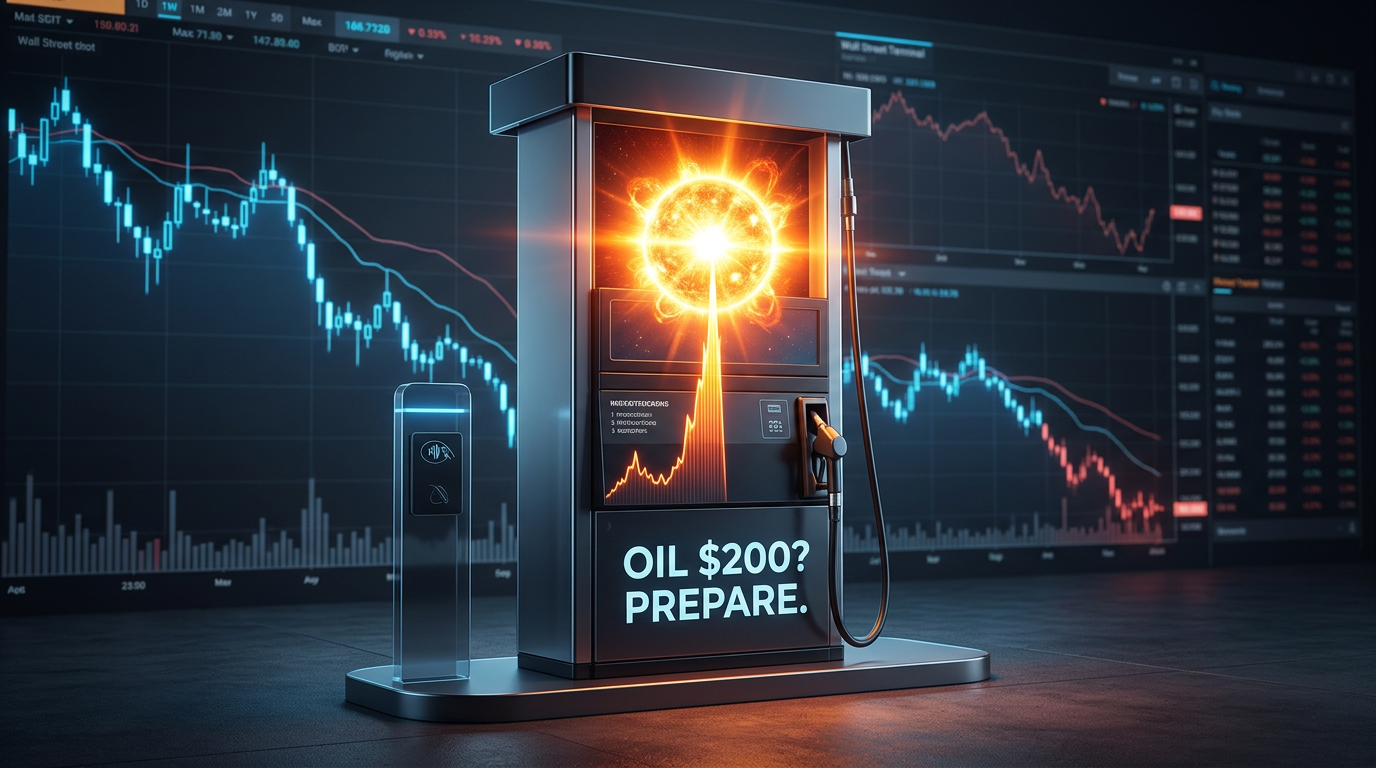
Right now, a major Wall Street firm is sounding a massive alarm about energy prices. They are warning that crude oil could shoot up to $200 a barrel.
To put that in perspective, that is roughly double what oil costs today. MarketWatch recently published a report detailing this exact scenario.
The report notes that one analyst called the idea of $200 oil "like the sun exploding" for the global economy. This dramatic warning comes as tensions in the Middle East continue to threaten major supply routes.
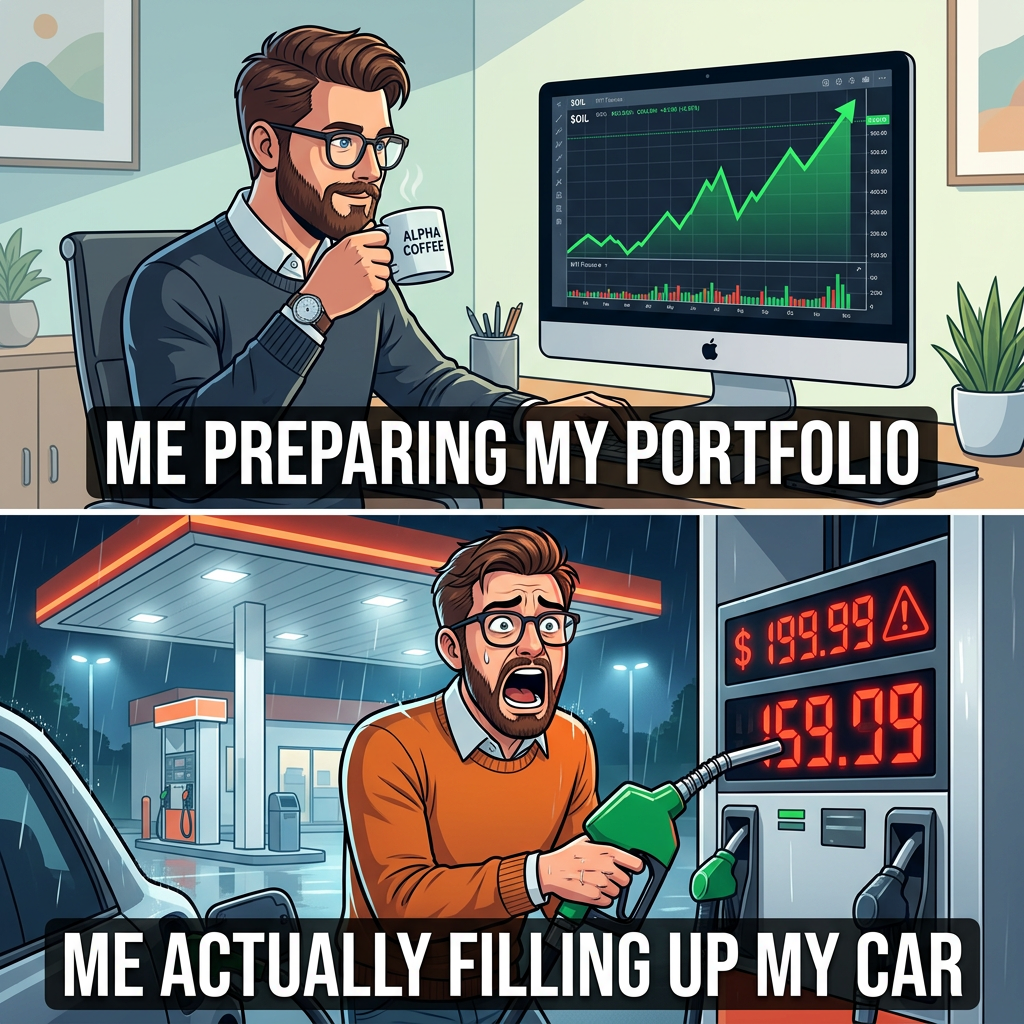
If oil actually hits $200, it would change almost everything about our daily lives. Gas prices would skyrocket past anything we have ever seen at the pump.
The cost to ship food, clothing, and electronics would immediately jump. But the firm making this prediction says it is not too late for regular investors to prepare.
They suggest that people can still protect their money before prices get out of hand. The key is understanding exactly what is happening in the energy market right now.
We are looking at a classic supply and demand problem mixed with global politics. When the places that pump the most oil get caught in conflicts, the entire world feels the squeeze.
And because oil is the lifeblood of global trade, a price spike touches every single industry. This news about "It’s like the sun exploding: One Wall Street firm fears $200 oil — and says it’s not too late for investors to prepare - MarketWatch" has traders paying close attention.
But you do not need to be a Wall Street insider to understand what is at stake. You just need to know how energy prices actually work.
Let us look at why this warning matters so much right now. We will also explore what you can actually do to shield your finances.
Because when the sun explodes, you want to make sure you have some shade.
The Domino Effect of Expensive Energy
But here is what is really interesting about this massive price warning. Oil is not just the stuff you put in your car to get to work.
It is the invisible ingredient in almost everything you buy, eat, and use. When the price of crude oil doubles, it starts a brutal chain reaction.
A farmer has to pay more for the diesel that runs their tractors. Then, the trucking company charges more to drive that food to your local grocery store.
By the time you buy a simple apple, the hidden cost of oil has been added three different times. This is why Wall Street analysts get so nervous about energy spikes.
High oil prices act like a giant tax on the entire global economy. High oil prices do not just make driving expensive.
They make literally everything expensive by raising the cost of moving things from point A to point B. So, when a headline screams "It’s like the sun exploding: One Wall Street firm fears $200 oil — and says it’s not too late for investors to prepare - MarketWatch", they are not exaggerating.
A shock like that forces people to stop spending money on fun things. They have to spend all their cash just covering basic needs like food and gas.
And this is where it gets fascinating for regular investors. While most people panic during an energy crisis, smart money looks for ways to adapt.
They understand that money does not disappear during a crisis; it just moves to different places. If oil goes to $200, energy companies will suddenly make record profits.
Companies that build alternative energy sources also become much more valuable. The trick is figuring out where the money is going before it gets there.
The Simple Math Behind A Global Crisis
Let me break this down for you using a very simple comparison. Imagine you are trying to fill a giant swimming pool with a garden hose.
Now imagine your neighbor keeps stepping on the hose, slowing the water to a trickle. The pool is the global demand for oil, which is always incredibly high.
The hose is the global supply chain that brings oil out of the ground. The neighbor stepping on the hose represents geopolitical conflicts.
When supply gets squeezed but demand stays high, prices absolutely explode. This is basic economics, but it plays out on a massive, terrifying scale.
According to the U. S.
Energy Information Administration, the world consumes over 100 million barrels of oil every single day. Even a tiny disruption in that flow causes panic in the markets.
Traders start bidding up the price of the oil that is still available. Before you know it, that panic trickles down to the sign at your local gas station.
But it is not just about cars and trucks anymore. Oil is heavily used to make plastics, fertilizers, and even modern medicines.
The International Energy Agency constantly tracks how deeply embedded petroleum is in our daily manufacturing. If we see $200 oil, the cost to manufacture almost any physical product will surge.
This is the exact scenario described in "It’s like the sun exploding: One Wall Street firm fears $200 oil — and says it’s not too late for investors to prepare - MarketWatch". It is a recipe for sudden, painful inflation.
However, understanding this mechanism gives you a massive advantage. When you know how the machine works, you stop being surprised when it breaks down.
You can actually take steps to protect yourself from the blast radius.
How to Build Your Financial Bomb Shelter
The thing that surprised me most was the firm's optimism about preparation. They are basically saying a financial hurricane is forming, but the hardware store is still open.
You just need to know which supplies to buy. First, investors usually look at energy stocks and commodities as a direct shield.
When the price of crude oil goes up, the companies pulling it out of the ground make more money. Owning a piece of those companies can help offset the extra money you are spending at the pump.
Second, periods of high oil prices often accelerate the push for alternatives. When gas gets too expensive, electric vehicles and renewable energy suddenly look much more attractive.
Smart investors often balance their portfolios by betting on the future of energy, not just the present. It is also crucial to look at companies that have strong pricing power.
These are businesses that can raise their prices without losing customers. If their shipping costs go up, they just pass that cost to the consumer, protecting their profits.
The best defense against inflation is owning assets that naturally rise in value when the cost of living goes up. You do not need to panic about the phrase "It’s like the sun exploding: One Wall Street firm fears $200 oil — and says it’s not too late for investors to prepare - MarketWatch".
Panic is what happens when you are caught off guard. Preparation is what happens when you pay attention to the warning signs.
By diversifying your investments now, you build a shock absorber for your wealth. You might not be able to stop the sun from exploding.
But you can definitely make sure you are wearing the right sunglasses when it happens.
The Final Word
A $200 barrel of oil wouldn't just be an economic disaster; it would be a forced evolution, violently pushing the world to finally figure out how to live without it.